A Local Guide to UK Stationery Shopping: Independent Shops, Markets and Online Retailers
October 09, 2026 - Stationery
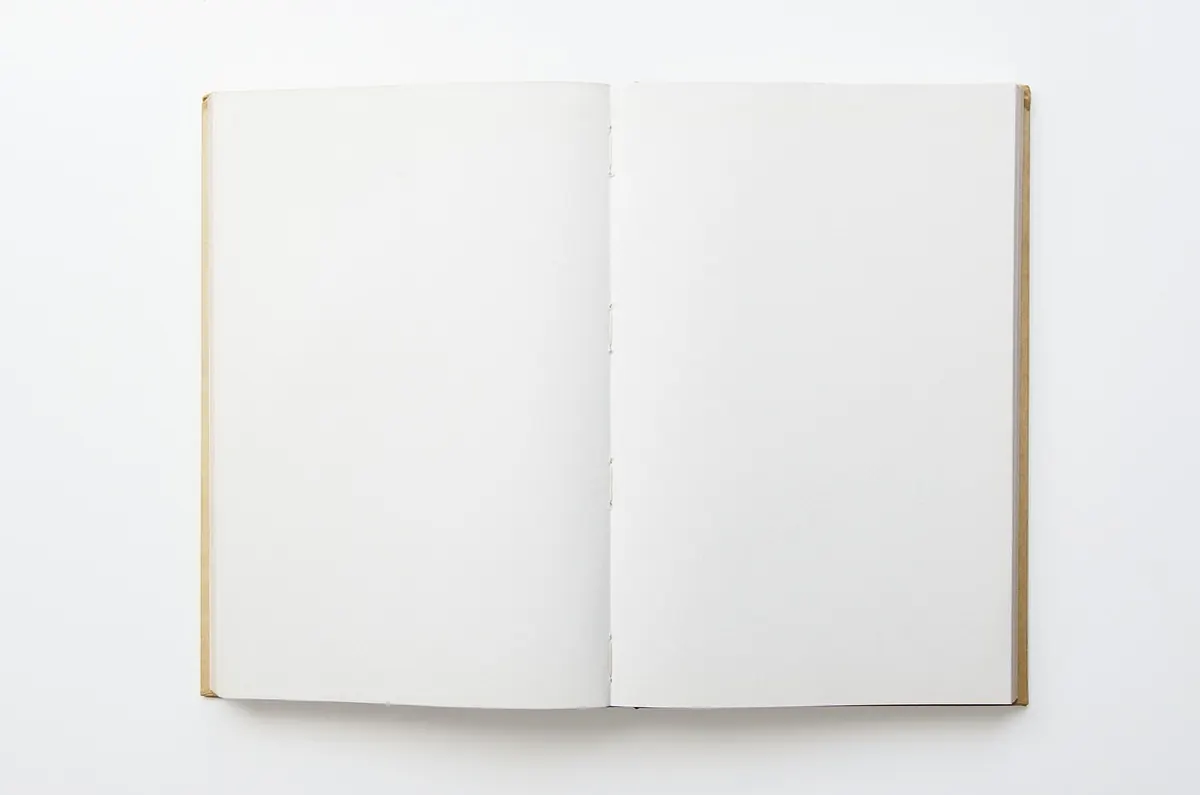
A blank notebook is a lovely thing until you have to write in it. That first page can sit there for weeks, daring you to spoil it. The fix isn't willpower; it's choosing a format that matches what you actually want from the page.
Four styles do most of the work for most people: bullet journaling, morning pages, gratitude journaling, and the commonplace book. They look wildly different on the page, and that's precisely the point. One is a logistics system. One is a brain drain. One is a mood intervention. One is a personal library. Choose the wrong one and you'll quit within a week, convinced you're "just not a journaling person." Choose the right one and the habit starts holding itself up.
Here's what each style actually asks of you, what it gives back, and how to tell which one fits the season of life you're in right now.
Most journaling advice begins with supplies: dotted or lined, A5 or A4, fountain pen or gel. That's backwards. The format should follow the function. Before you buy anything, answer three questions honestly.
Your answers point you toward a style faster than any personality quiz. And they change over time — the format that carried you through a chaotic job move may feel useless six months later. That's not failure. That's a signal to switch.
Bullet journaling, developed by designer Ryder Carroll, is the most misunderstood of the four. People see the elaborate spreads on social media and assume it requires calligraphy and an hour of setup. In its original form it's nearly the opposite: a fast, plain, ruthlessly practical way to track what you need to do, remember, and reflect on.
The core mechanic is a small set of symbols. A dot means a task. A circle means an event. A dash means a note. When you finish a task you mark it complete; when you don't, you migrate it forward to the next day or month. That migration step is the secret engine of the whole system — it forces you to look at every unfinished item and decide, consciously, whether it still deserves your attention.
The structure is usually three layers:
Say it's Tuesday morning. You open to today's entry and write: • email landlord about the leak, • draft the quarterly summary, o dentist 3 p.m., – idea: batch the invoicing on Fridays. That night, you cross off the email, move the quarterly summary to Wednesday because a meeting ate your afternoon, and leave the invoicing idea where it is. Total time: four minutes. Nothing lost, nothing spinning in your head at midnight.
Bullet journaling is for people who feel scattered, who have too many open loops, and who want one place where tasks and reflection coexist. If you love the idea of a planner but hate the rigid structure of one, this is your style. If you mostly want to explore feelings rather than manage logistics, it will feel like filing paperwork.
Morning pages come from Julia Cameron's The Artist's Way, and the rule is deliberately unglamorous: first thing in the morning, before anything else, write three pages by hand. Not two. Not "until you feel done." Three.
They are not meant to be good. They aren't meant to be read, shared, or kept in a handsome leather volume. They're meant to be a place where the noise goes so it stops running the show.
The point of morning pages is not the pages. It's the rest of the day, unloaded.
For the first few days you'll write about how pointless the exercise is. Then you'll start writing about the thing that's actually bothering you — the argument from last week, the project you're avoiding, the fact that you're 34 and still not sure what you want. It arrives quietly, usually around the middle of page two, once your brain has exhausted its supply of complaints about morning pages themselves.
Most people never read back what they've written. That's fine. Some people read it once a month and are startled by the patterns. Also fine.
This one is for overthinkers, creatives, and anyone carrying a low-grade hum of anxiety they can't name. It's also the hardest of the four to sustain, because it demands twenty uninterrupted minutes at the least convenient hour of the day. If your mornings are chaos, don't fight it — try the same practice at night under a different name, or accept that this isn't your season for it.
Gratitude journaling has a branding problem. It sounds twee, and the versions sold in gift shops — pastel prompts about "three things I'm thankful for" — have flattened something that research consistently finds useful. The practice works, but only when it's specific.
Five items, once a day, or three items, three times a week. Both work. What matters is the level of detail and the reason behind it.
The reason detail matters is that vague gratitude is just a mood, and moods evaporate. Specific gratitude is evidence. Over a few weeks, the list becomes an argument against your own worst assumptions about your life.
This is the gentlest entry point and the best style for anyone who has tried journaling and bounced off a blank page. Three lines counts. It takes ninety seconds and it survives bad weeks, which is more than most habits can say.
A commonplace book is the oldest style here, used by everyone from Marcus Aurelius to Virginia Woolf. It isn't really a diary. It's a curated collection of passages, quotes, arguments, diagrams, and observations you've encountered and want to keep.
Read something. When a line stops you, copy it out by hand and note where it came from. Add a sentence about why it mattered — this is the step most people skip, and it's the one that turns a scrapbook into a thinking tool.
Thirty years of reading, filtered by your own judgment, is a far more interesting document than thirty years of daily summaries of your own moods.
Readers, students, and anyone whose thoughts mostly arrive as responses to someone else's work. If you've ever highlighted an entire book and remembered none of it, this is the correction.
You can also combine two, but keep it lopsided. One format should do most of the work and the second should be a small satellite. A bullet journal with a gratitude line at the bottom of each page is a strong pairing. A full commonplace system plus three morning pages plus a daily mood tracker is a project you'll abandon by Thursday.
If you're still undecided, run a short trial instead of agonizing. Spend four days on bullet journaling, four on morning pages, three on gratitude, and three on a commonplace book. Then look at which one you kept doing without negotiating with yourself.
That's the real test. Not which style sounds most appealing, but which one you'll open on a Tuesday when you're tired and nothing feels urgent.
The blank first page is only intimidating because it could become anything. Decide what you want from it, and it stops being a dare and starts being a room you like spending time in.
Photo: BRRT / Pixabay

Where to find good stationery in the UK, from independent shops and market stalls to specialist online retailers,...
A practical guide to starting letter writing: choosing simple stationery, finding a reliable pen pal, writing a...
Copyright © 2026 Inkwell Lab. All Right Reserved.